


A First-Time Visitor’s Guide to Beacon Hill
- Lori S.
- Jan 18
- 6 min read

Updated: Jan 19
Affiliate Disclosure:
This post may contain affiliate links. If you book through one of these links, I may earn a small commission at no extra cost to you. I only recommend tours and experiences I genuinely believe are helpful for visitors to Boston. Beacon Hill is one of Boston’s most iconic neighborhoods—and for first-time visitors, it truly feels like stepping back in time. Brick row houses, gas lanterns, and winding streets give the area a distinctly historic atmosphere that’s very different from downtown Boston. While it’s compact, Beacon Hill is packed with character, history, and local favorites, making it an essential stop on any first visit to the city.
Below is what to see, where to eat, and what to expect when walking Beacon Hill for the first time.

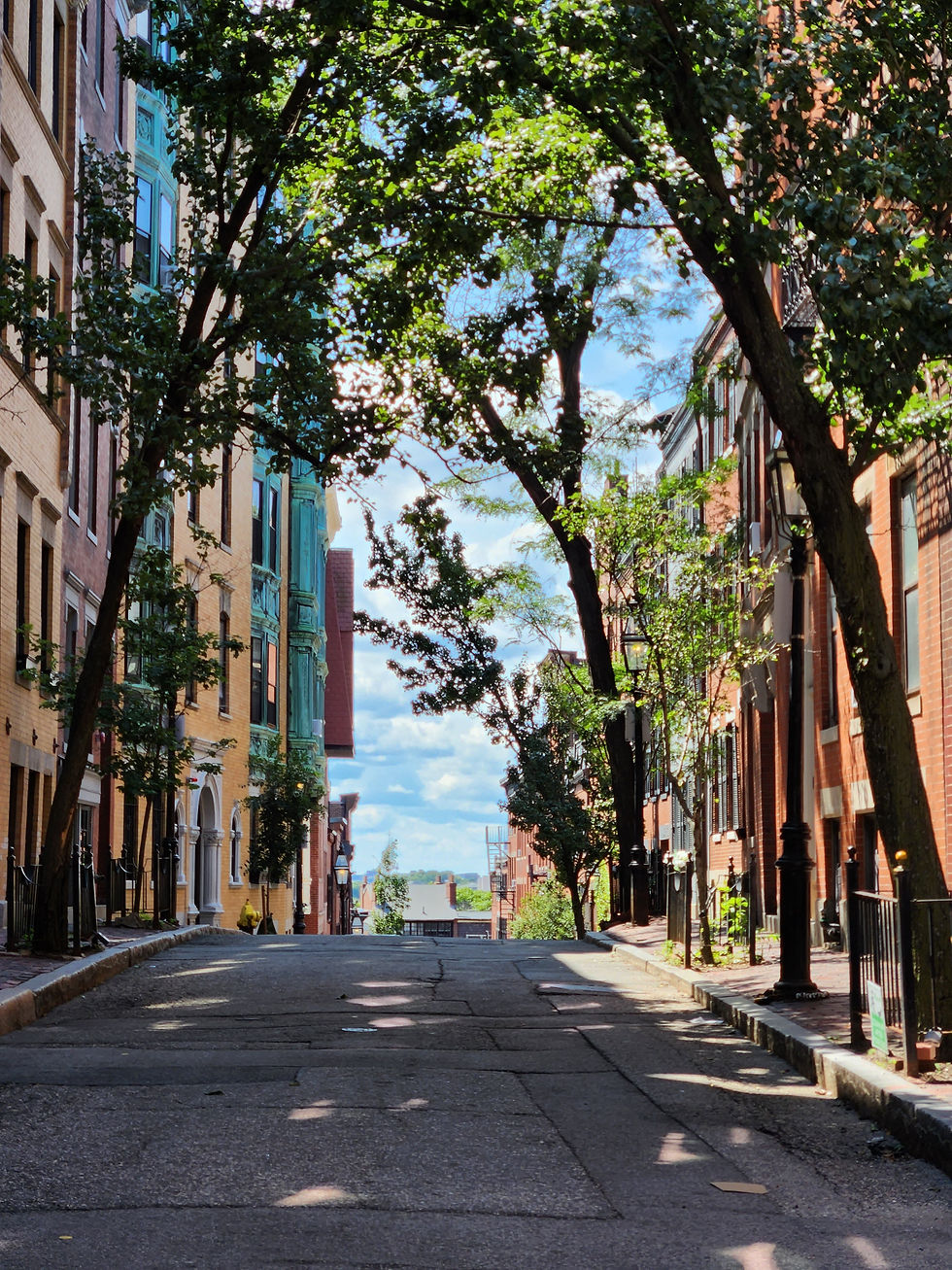
What to See in Beacon Hill

Massachusetts State House Perched at the top of Beacon Hill, the Massachusetts State House is one of Boston’s most recognizable landmarks. The gleaming gold dome is visible from many parts of the city and makes a great visual anchor as you explore the neighborhood. Free tours are sometimes available, but even a walk around the building and its grounds offers excellent photo opportunities and a strong sense of Boston’s political history.


Boston Common
Beacon Hill sits right next to Boston Common, making it easy to combine the two in one outing. The Common provides wide paths, benches, and green space—an ideal contrast to Beacon Hill’s tight streets. It’s also a convenient starting or ending point if you’re exploring nearby areas like Downtown Crossing or the Public Garden.

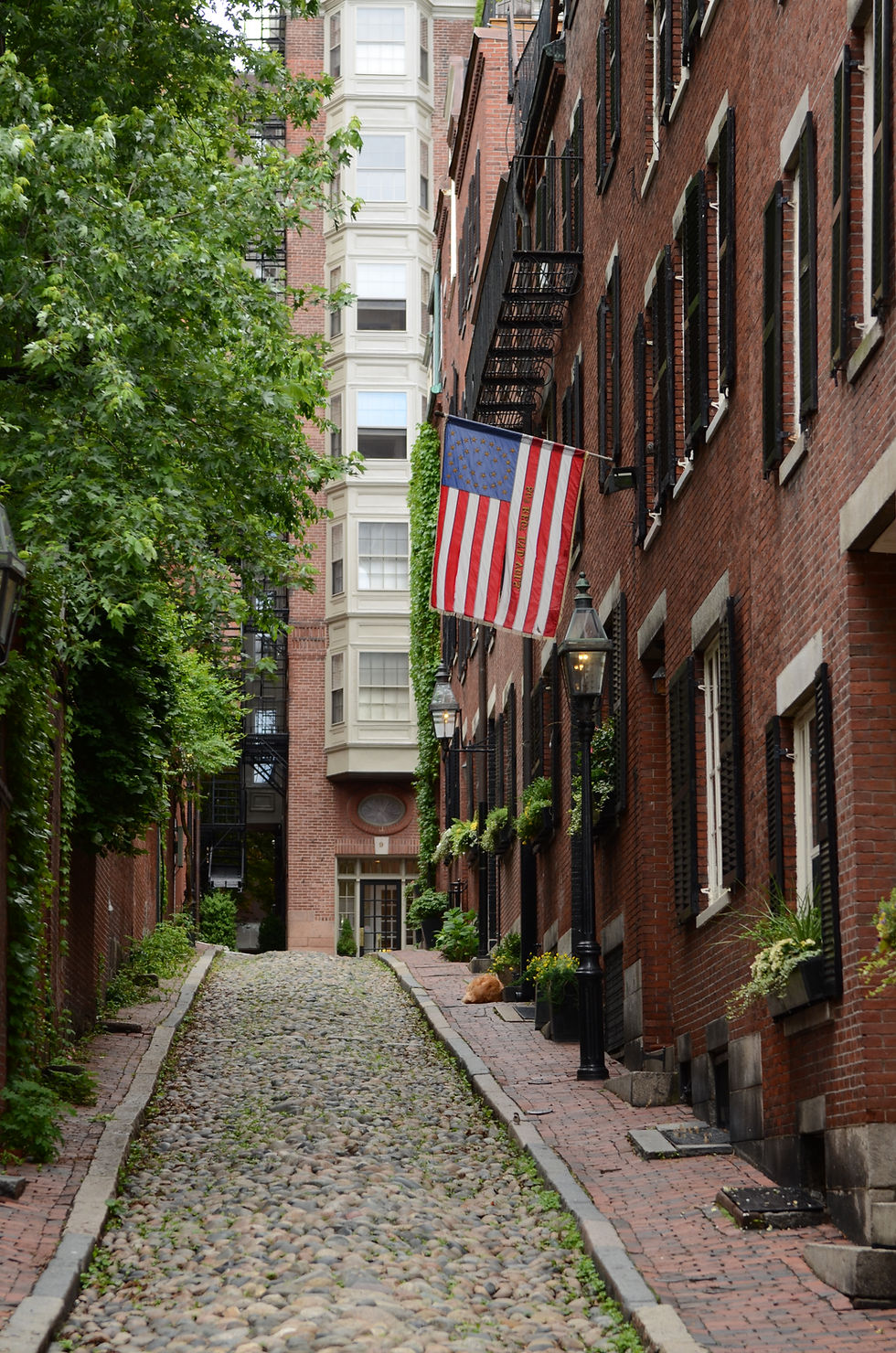
Acorn Street Acorn Street is famous for a reason. This short, steep cobblestone lane lined with historic brick row houses and gas lamps is often called one of the most photographed streets in the United States. Built in the early 1800s as a service road for nearby homes, it still feels remarkably unchanged today. It’s worth a quick stop for photos, but keep in mind that it’s a fully residential street—visit respectfully, avoid blocking doorways, and expect very uneven footing underfoot, especially after rain or snow.

Louisburg Square Louisburg Square represents the more refined and exclusive side of Beacon Hill. Surrounded by elegant Federal- and Greek Revival–style townhouses, this private square has long been home to some of Boston’s most influential residents. Over the years, notable figures such as Louisa May Alcott and former U.S. Secretary of State John Kerry have lived on or near the square, adding to its historic prestige. Today, it remains a private enclave with residents that include politicians, business leaders, and long-time Boston families. While you can’t enter the square itself, walking around its perimeter offers a quiet glimpse into old Boston wealth, architecture, and residential life.

Charles Street Charles Street is the main commercial artery of Beacon Hill and where most visitors naturally gravitate. Lined with locally owned boutiques, antique shops, bookstores, salons, and specialty stores, it feels charmingly small-scale compared to Boston’s busier shopping areas. This is also where you’ll find many of Beacon Hill’s best cafés and restaurants, making it an ideal place to pause, refuel, and soak in the neighborhood atmosphere. Whether you’re browsing window displays or grabbing a coffee, Charles Street is the social heart of Beacon Hill and a great spot to linger.

African American History in Beacon Hill
Beacon Hill is also one of the most important places in the country for African American history, and first-time visitors should not miss this part of the neighborhood. The Black Heritage Trail runs through the north slope of Beacon Hill, highlighting the story of Boston’s free Black community in the 19th century and its central role in the abolitionist movement. Key stops include the African Meeting House, the oldest Black church building still standing in the United States, where abolitionist leaders once gathered, and the adjacent Museum of African American History, which provides deeper context through exhibits on daily life, activism, and the Underground Railroad. Walking along streets like Joy Street and Smith Court, you’ll pass historic homes that once belonged to Black educators, veterans, and community leaders, offering a powerful reminder that Beacon Hill’s history extends far beyond its famous cobblestones and grand townhouses.
Where to Eat & Drink
The Paramount
📍 44 Charles Street, Boston, MA 02114 A longtime favorite among locals, The Paramount is known for hearty breakfasts, brunch classics, and casual lunches. The menu leans toward comfort food, and the lively atmosphere gives you a feel for everyday neighborhood life. It can get busy, especially on weekends, so timing your visit can make a big difference.
75 Chestnut
📍 75 Chestnut Street, Boston, MA 02108 This cozy, welcoming restaurant is perfect if you’re looking for a sit-down meal without anything too formal. The menu focuses on classic American dishes, and it’s a popular choice for both lunch and dinner. It’s the kind of place that feels like a true neighborhood staple rather than a tourist stop.
No. 9 Park
📍 9 Park Street, Boston, MA 02108 Located near the State House, No. 9 Park offers a more upscale dining experience for visitors looking to splurge. Known for its refined atmosphere and French- and Italian-inspired dishes, it’s a great option for a special night out. Reservations are recommended, especially during peak travel seasons.
Tatte Bakery & Cafe
📍 70 Charles Street, Boston, MA 02114 Tatte is a reliable stop for coffee, pastries, and light meals. It’s especially convenient if you want something quick before continuing your walk through Beacon Hill or Boston Common. Seating can fill up fast, but it’s an easy grab-and-go option when you’re short on time. Starbucks (Beacon Hill)
📍 65 Charles Street, Boston, MA 02114
Tucked along Charles Street is one of Beacon Hill’s most unexpected claims to fame. The Starbucks here is widely known as the location where the Frappuccino was invented in the early 1990s, originally inspired by a blended coffee drink popular in Boston at the time. What started as a local experiment eventually became one of Starbucks’ most iconic menu items worldwide. Today, it looks like a typical Starbucks, but for coffee fans, it’s a fun and little-known piece of Boston food history worth a quick stop.


What to Prepare For When Walking Beacon Hill
Beacon Hill is beautiful, but it’s not the easiest neighborhood to walk—especially if you’re not prepared.
Hills & Elevation Changes The streets are steep in places, with noticeable elevation changes that can surprise first-time visitors. You’ll encounter staircases, sloped sidewalks, and streets that feel more like ramps than roads. Plan extra time and take breaks when needed.
Cobblestones & Brick Sidewalks Uneven surfaces are part of Beacon Hill’s charm, but they can be tough on your feet. Original cobblestones and brick sidewalks mean comfortable, supportive walking shoes are essential. This is not the neighborhood for brand-new shoes or anything without traction.
Narrow Streets & Limited Space Many streets are narrow, and sidewalks can feel tight, especially when other visitors are around. Cars still use these roads, so staying aware of traffic is important. Walking single-file in busier areas can make things easier.
Weather Considerations Rain, snow, or ice can make Beacon Hill especially slippery. In colder months, shaded streets may hold ice longer than other parts of the city. Checking the weather and dressing accordingly will make your visit much more enjoyable.


Tips for First-Time Visitors
Beacon Hill is best enjoyed at a slower pace—this is a neighborhood meant for wandering, not rushing.
Early mornings are ideal for photos and quieter walks, especially on Acorn Street and Charles Street.
Pair Beacon Hill with Boston Common and the Public Garden for a well-rounded half-day outing.
Remember that many streets are residential, so be mindful of noise and private property.
For first-time visitors, Beacon Hill delivers a classic Boston experience filled with history, architecture, and local flavor. With the right expectations—and the right shoes—it’s one of the most rewarding neighborhoods to explore on foot.


